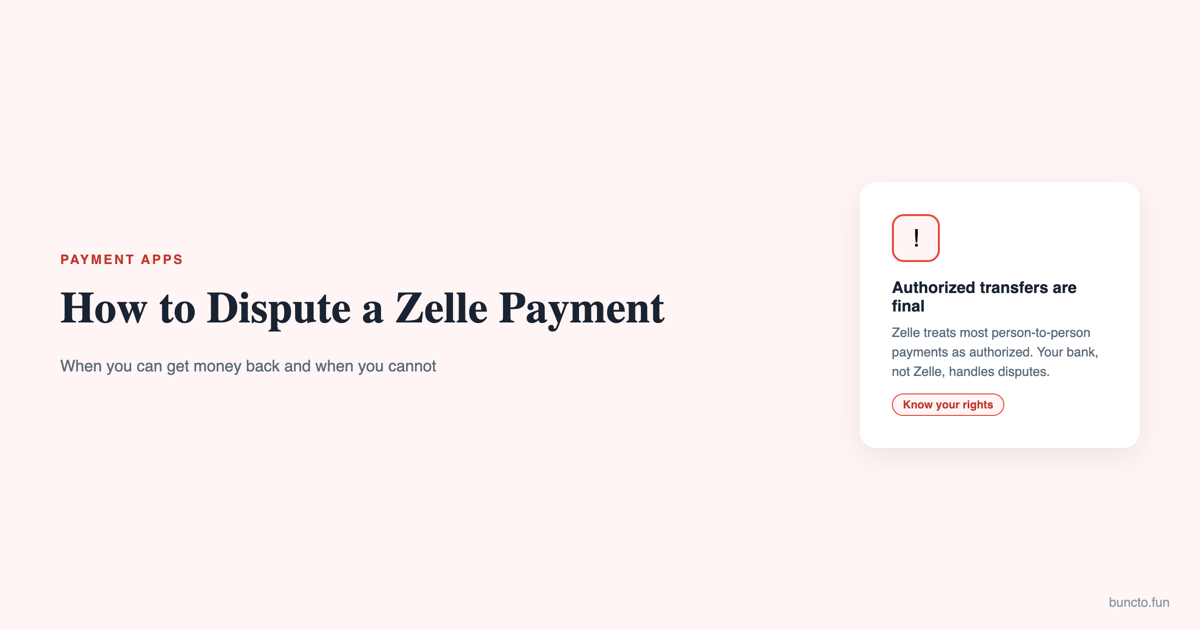
Quick answer: Zelle does not offer buyer protection, and most Zelle transfers are irreversible once sent. To dispute a Zelle payment, you must contact your bank directly — not Zelle. Your bank may investigate under Regulation E if the transfer was unauthorized, but if you willingly sent the money, recovery is unlikely. The dispute process typically takes 10 to 45 business days depending on your financial institution.
Can You Actually Get Money Back From Zelle?
Zelle transactions are instant and generally irreversible, according to Zelle’s consumer FAQ. This is the fundamental problem with Zelle disputes. Unlike credit card chargebacks or Venmo’s purchase protection, Zelle has no built-in dispute mechanism for consumers.
The distinction that matters is authorized vs. unauthorized. If someone accessed your bank account without permission and sent a Zelle payment, that is an unauthorized transaction. Your bank is required to investigate under Regulation E of the Electronic Fund Transfer Act. If you sent the money yourself — even if you were tricked — the transfer is considered authorized. Banks are not legally required to refund authorized transfers, though some do voluntarily.
This is what consumer advocates call the “authorized transfer trap.” Scammers exploit it by convincing you to send money willingly through impersonation, fake invoices, or marketplace fraud. Once you hit send, Zelle’s job is done. Your only recourse is your bank’s internal fraud team.
How Do You File a Dispute With Your Bank?
Since Zelle is a payment network operated by Early Warning Services, the dispute goes through your bank, not Zelle itself. Here is the step-by-step process that applies at most major banks.
Step 1: Contact your bank immediately. Call the fraud or disputes department. Do not wait. Most banks require you to report unauthorized transactions within 60 days of the statement date to preserve your full rights under Regulation E. The sooner you report, the stronger your claim.
Step 2: File a formal dispute. Your bank will open an investigation. You will typically need the transaction date, amount, recipient name, and a written explanation of what happened. Some banks accept this by phone; others require a signed affidavit.
Step 3: Provisional credit. For unauthorized transactions, banks must provide a provisional credit within 10 business days while they investigate. The investigation can take up to 45 business days for standard accounts, or 90 days for new accounts.
| Bank | Dispute Method | Provisional Credit Timeline | Investigation Window |
|---|---|---|---|
| Chase | Phone or branch visit | Up to 10 business days | Up to 45 days |
| Bank of America | Phone, online, or branch | Up to 10 business days | Up to 45 days |
| Wells Fargo | Phone or branch | Up to 10 business days | Up to 45 days |
| Capital One | Phone or online | Up to 10 business days | Up to 45 days |
| Chime | In-app or email | Up to 10 business days | Up to 45 days |
What Counts as Unauthorized vs. Authorized?
This is where most Zelle disputes succeed or fail. Unauthorized means someone accessed your account or device without your knowledge and initiated a transfer. Examples include a stolen phone with no screen lock, a compromised banking password, or a family member sending money without permission.
Authorized means you initiated the transfer yourself, regardless of the circumstances. If a scammer posing as your bank’s fraud department told you to “move your money to a safe account” via Zelle, you authorized that payment. If you paid a Facebook Marketplace seller who never shipped the item, you authorized that payment. The Consumer Financial Protection Bureau has pushed banks to expand refund policies for scam-induced authorized transfers, but compliance varies widely by institution.
My honest take: the current system is stacked against consumers in authorized-transfer scams. Until regulation catches up, treat every Zelle payment as final. Read how we verify these claims.
When Will Banks Actually Refund Zelle Payments?
Banks refund Zelle payments in a narrow set of circumstances. Unauthorized access reported within 2 business days limits your liability to 0 under Regulation E. Report between 2 and 60 days and your liability rises to 00. After 60 days, you may lose the full amount.
Some banks have voluntarily expanded refund policies for certain scam types. According to reporting from the CFPB, JPMorgan Chase, Bank of America, and Wells Fargo — which together process the majority of Zelle transactions — began reimbursing certain impersonation scams in recent years. But these policies are not standardized and are applied at bank discretion.
If your bank denies the dispute, you can escalate by filing a complaint with the CFPB at consumerfinance.gov/complaint. CFPB complaints are forwarded to the bank and often receive faster resolution than internal appeals.
How Can You Protect Yourself Before Sending Zelle?
Only send Zelle payments to people you know and trust. This is not a suggestion — it is the only reliable protection. Zelle is designed for splitting dinner, paying your landlord, or reimbursing a friend. It is not designed for marketplace purchases, contractor payments to strangers, or any transaction where you might need a refund.
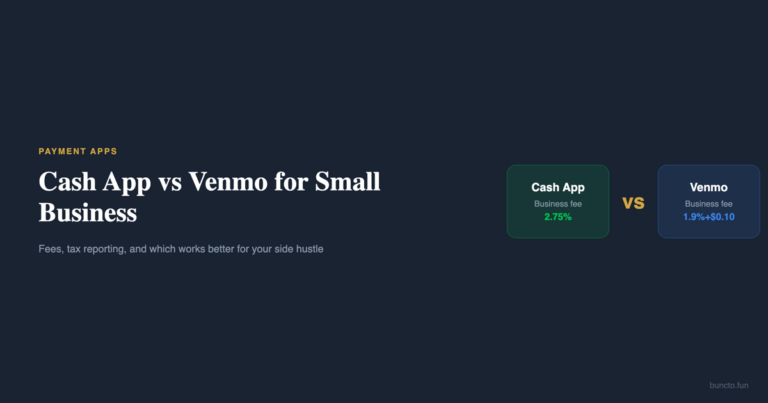
For purchases from strangers, use platforms with built-in buyer protection: Venmo’s goods and services option, PayPal Purchase Protection, or a credit card. These cost a small fee but give you recourse if the seller does not deliver. When you need to compare payment apps for business use, see our Cash App vs Venmo for small business guide.
Enable all available security features on your banking app: biometric login, transaction alerts, and two-factor authentication. If your bank offers Zelle transaction limits, set them to the lowest amount that works for your regular use.
Sources
- Zelle Consumer FAQ — transaction finality and dispute policy
- Consumer Financial Protection Bureau (CFPB) — Regulation E and consumer complaint process
- Federal Reserve Regulation E — Electronic Fund Transfer Act rights and timelines
- FDIC — deposit insurance and banking regulation