Buy now pay later grew from 4 billion in US transaction volume in 2021 to an estimated 0 billion in 2025, according to Insider Intelligence projections. About 43% of Gen Z and 42% of millennials have used BNPL, per a 2024 CFPB survey. The product is simple in concept — split a payment into parts — but the details on fees, credit impact, and consumer protections vary significantly across providers. This guide covers what BNPL actually costs, how it changed when credit reporting started in 2025, when it makes financial sense, and when it does not. For our fact-checking process, see the methodology page.
In this article
How does buy now pay later actually work?
BNPL is a point-of-sale loan that splits a purchase into fixed installments, typically four payments every two weeks, with no interest charged if all payments are made on time. The merchant pays the BNPL provider a fee (3-8% of the transaction). The consumer pays the purchase price in installments. The BNPL company makes money from merchant fees and, in some cases, from late fees and interest on longer-term loans.
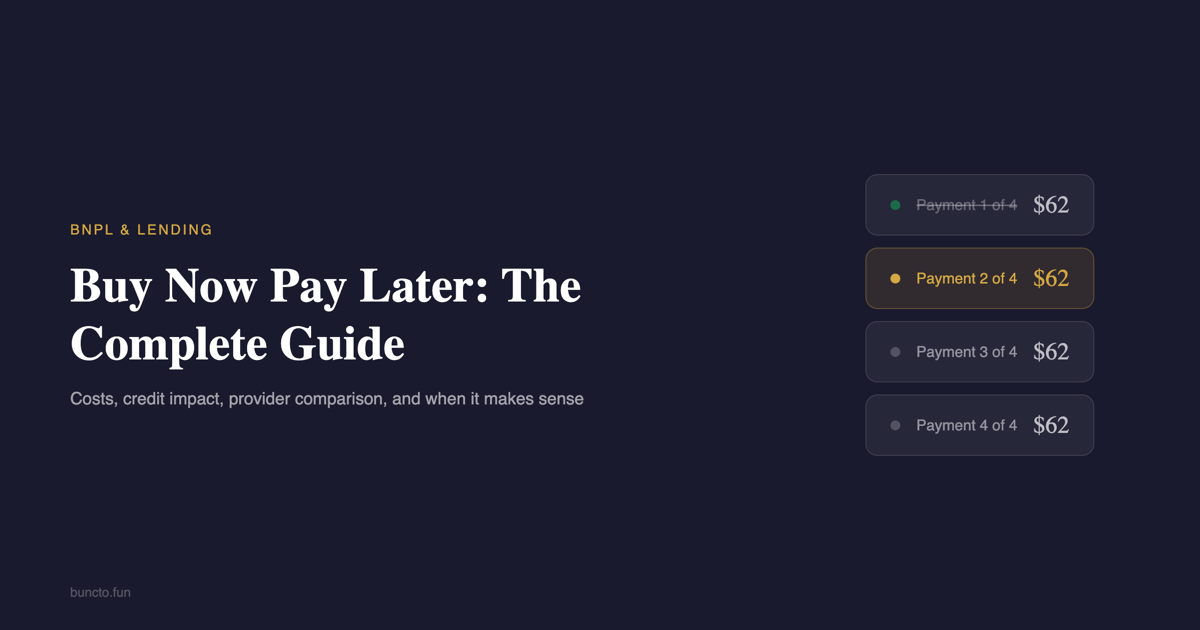
There are two distinct BNPL models. Pay-in-four splits the purchase into four equal payments over six weeks. No interest. Late fees may apply. This is what most people mean by “buy now pay later.” Monthly installment plans are longer-term (3-36 months) and may charge interest. Affirm’s monthly plans charge 0-36% APR depending on the merchant and your creditworthiness. These are closer to traditional personal loans than to the pay-in-four product.
The approval process is a soft credit check for most pay-in-four transactions. You enter your name, email, and phone number at checkout. The provider runs a soft inquiry (no credit score impact) and approves or denies within seconds. Longer-term installment plans may require a hard inquiry.
How do Affirm, Klarna, and Afterpay compare?
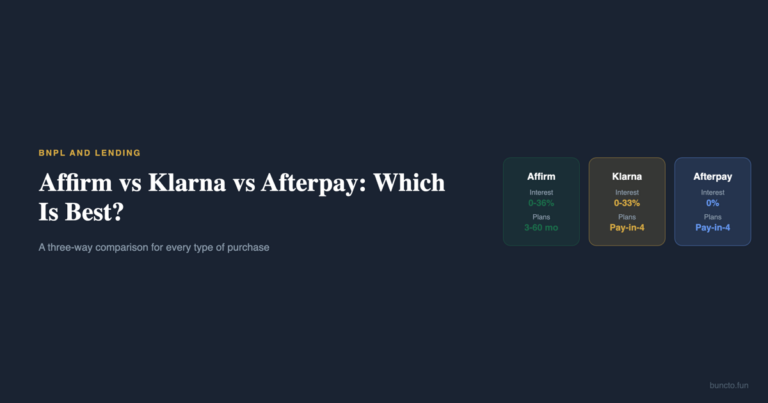
Affirm offers the widest range of financing terms. Klarna has the largest merchant network. Afterpay is the simplest for small pay-in-four purchases. All three changed their credit reporting policies in 2025.
| Feature | Affirm | Klarna | Afterpay | PayPal Pay Later |
|---|---|---|---|---|
| Pay-in-four available | Yes | Yes | Yes | Yes |
| Monthly installments | 3-60 months | 6-36 months | 6-12 months (select merchants) | 6-24 months |
| Interest on pay-in-four | 0% | 0% | 0% | 0% |
| Interest on monthly plans | 0-36% APR | 0-24.99% APR | N/A (fee-based) | 0-31.99% APR |
| Late fee (pay-in-four) | No late fees | Up to per payment | per payment (capped) | No late fees |
| Reports to credit bureaus | Experian (monthly plans) | TransUnion | Equifax | Varies |
| Hard credit check | Monthly plans only | No (pay-in-four) | No | Monthly plans only |
| Merchant coverage | 245,000+ | 500,000+ | 100,000+ | Any PayPal merchant |
The credit reporting difference matters. Affirm reports monthly installment plans to Experian but not pay-in-four. Klarna began reporting all plan types to TransUnion in mid-2025. Afterpay reports to Equifax. If you use multiple BNPL providers, payments may appear at different bureaus, which means your credit file looks different depending on which bureau a lender checks.
Does buy now pay later affect your credit score?
Yes, as of 2025. On-time BNPL payments can help your score. Missed payments will hurt it. This is a major change from 2024, when most BNPL activity was invisible to credit bureaus. For a detailed breakdown of exactly how each provider reports, read our dedicated guide on BNPL and credit score impact.
The credit impact depends on the plan type. Pay-in-four plans are short-term (6 weeks) and appear as small tradelines. The scoring models are still calibrating how to weight these. FICO 10T and VantageScore 4.0 incorporate BNPL data. Older scoring models (FICO 8, which most lenders still use) may not factor it in. Monthly installment plans appear as standard installment loans and are treated like any other loan by all scoring models.
The CFPB has pushed for transparency in how BNPL payments are reported. The bureau’s position is that BNPL providers should report to all three bureaus for both on-time and late payments, so consumers get credit for responsible use. As of when I last checked, no provider reports to all three bureaus for pay-in-four plans.
When does BNPL make financial sense versus a credit card?
BNPL makes sense for purchases under 00 where you will pay all four installments on time and do not have a 0% APR credit card available. In every other scenario, a credit card is cheaper, more flexible, and better protected.
The math is straightforward. A 00 purchase split into four 0 payments over six weeks with Afterpay costs exactly 00 if paid on time. The same 00 on a credit card with a 20% APR, paid over six weeks in four equal payments, costs approximately 03. The difference is negligible. But the credit card offers purchase protection, chargeback rights, and builds credit history at all three bureaus.
Where BNPL wins: you do not have a credit card, or your credit card is maxed out, or the merchant offers a 0% APR Affirm plan over 6-12 months. Where BNPL loses: any purchase over 00 (credit card consumer protections are more valuable), any situation where you might miss a payment (late fees plus credit damage), and any purchase where a 0% intro APR card is available.
My recommendation: treat BNPL as a convenience tool, not a financing strategy. If you are using BNPL because you cannot afford the full purchase, that is a warning sign, not a solution. For how payment app protections compare, read our guide on Venmo safety for large payments.
What are the real risks of using BNPL?
The three main risks are overspending because the payments feel small, stacking multiple BNPL obligations across providers, and losing consumer protections that credit cards guarantee.
BNPL makes purchases feel 30-40% cheaper than they are, according to behavioral research cited by the CFPB. A 00 purchase presented as “4 payments of 00” triggers less spending resistance than a single 00 charge. This is by design. Merchants pay BNPL providers 3-8% of the transaction specifically because BNPL increases average order value by 20-50%.
Stacking is the most dangerous pattern. There is nothing stopping you from having active BNPL plans at Affirm, Klarna, Afterpay, and PayPal simultaneously. Since each reports to a different bureau (or none), there is no unified view of your total BNPL obligations. A person with ,000 in active BNPL payments may appear to have zero debt to a lender checking a bureau where none of those plans are reported.
Consumer protections are weaker than credit cards. BNPL transactions do not have chargeback rights under the Truth in Lending Act. If a merchant sends a defective product, your recourse with the BNPL provider is limited. Klarna and Afterpay have voluntary dispute resolution processes, but they are not legally required to refund you the way a credit card issuer is under Regulation Z.
Frequently Asked Questions
Some landlords and billers accept BNPL through services like Flex (for rent) and Afterpay (for select billers). However, using BNPL for recurring expenses like rent is risky because it turns a fixed obligation into installment debt. If you need help with cash flow timing, a 0% APR credit card or an employer paycheck advance is cheaper.
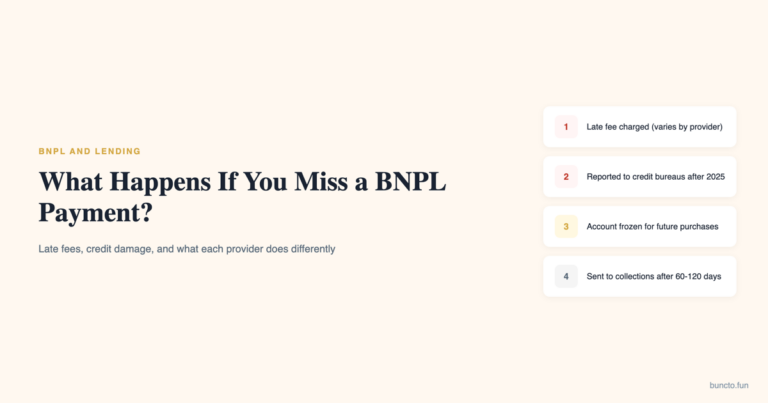
Late fees vary: Afterpay charges up to , Klarna up to , and Affirm charges no late fees. All providers may pause your ability to make new purchases. As of 2025, missed payments are reported to credit bureaus by Klarna (TransUnion) and Afterpay (Equifax), which can lower your credit score.
It can. Mortgage lenders review your credit report for active installment obligations. If your BNPL plans appear as tradelines, they factor into your debt-to-income ratio. Even if they do not appear on your credit report, some lenders check bank statements and may flag recurring BNPL payments as existing debt.
No. BNPL is a point-of-sale loan with a fixed repayment schedule. A credit card is revolving credit you can pay at your own pace (above the minimum). Credit cards offer stronger consumer protections, wider acceptance, and build credit at all three bureaus. BNPL is simpler but less flexible.
Yes, but the refund process is slower. The merchant processes the return, then the BNPL provider adjusts your payment plan. Remaining payments are reduced or eliminated. If you have already paid some installments, the BNPL provider refunds those. This process can take 5-10 business days, and disputes are handled by the BNPL provider, not the merchant.
Sources
- CFPB — Buy Now, Pay Later: Market Trends and Consumer Impacts
- Insider Intelligence — US BNPL Transaction Volume (2025)
- Affirm — How Affirm Works (accessed Aug 2026)
- Klarna — US Product Terms (accessed Aug 2026)
- Afterpay — How It Works (accessed Aug 2026)
- Federal Reserve — Economic Well-Being of US Households (2024 survey)