
Quick answer: Fintech apps like Self, Chime Credit Builder, Experian Boost, and Grow Credit can improve your credit score by adding positive tradelines or payment history to your credit report. A credit builder loan from Self reports to all three bureaus and costs as little as $25 per month. Experian Boost adds utility and subscription payments to your Experian report at no cost. The best approach combines two or three tools to build tradeline diversity while keeping total monthly costs under $50.
In this article
- Which Fintech Apps Actually Help Build Credit?
- How Does Experian Boost Work and Is It Worth It?
- What Is the Best Combination of Credit-Building Apps?
- Do Rent Reporting Services Actually Help Your Credit Score?
- How Long Until These Apps Improve Your Score?
- What Mistakes Should You Avoid With Credit-Building Apps?
- Sources
Which Fintech Apps Actually Help Build Credit?
Six fintech tools report payment activity to credit bureaus, each targeting a different part of your credit profile. They range from free to $25/month, and each works differently. Choosing the right combination depends on whether you need to create tradelines from scratch or boost an existing thin file.
| App | What It Does | Reports To | Monthly Cost | Best For |
|---|---|---|---|---|
| Self | Credit builder loan (installment tradeline) | Equifax, Experian, TransUnion | $25-$150 | No credit history at all |
| Chime Credit Builder | Secured credit card (revolving tradeline) | Equifax, Experian, TransUnion | $0 | Building revolving history |
| Experian Boost | Adds utility/subscription payments | Experian only | $0 | Quick score bump on Experian |
| Grow Credit | Reports subscription payments as tradeline | Equifax, Experian, TransUnion | $0-$9.99 | Adding payment history cheaply |
| Rent reporting (various) | Reports rent to credit bureaus | Varies (1-3 bureaus) | $0-$10 | Using rent you already pay |
| MoneyLion | Credit builder loan + banking | Equifax, Experian, TransUnion | Varies | All-in-one financial app |
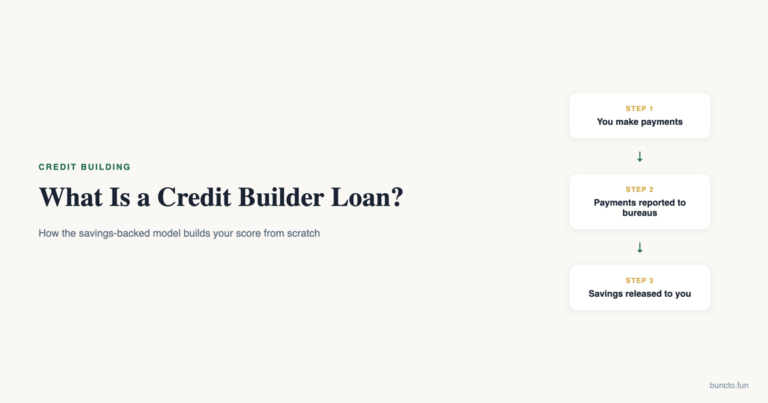
According to their product terms, Self and MoneyLion credit builder loans report to all three bureaus. This matters because credit scores require at least one tradeline open for six months, as noted by FICO.com. If you have no credit history, a credit builder loan creates that tradeline. See our credit builder loan guide for the full mechanics.
How Does Experian Boost Work and Is It Worth It?
Experian Boost connects to your bank account, identifies utility and subscription payments, and adds them to your Experian credit report. It is free, takes about five minutes to set up, and most users see a score increase of 10 to 15 points on their Experian FICO score immediately.
The limitation is scope. Boost only affects your Experian report. If a lender pulls your TransUnion or Equifax score, Boost provides no benefit. Experian reports that the average user gains 13 points, but results vary — people with thin files see larger jumps, while those with established credit see minimal change.
Boost works by reporting payments you are already making: electric bills, phone bills, Netflix, Spotify, and similar subscriptions. It does not create a traditional tradeline. Instead, it supplements your payment history with non-traditional data that Experian’s scoring model can incorporate. It costs nothing and cannot lower your score — if a newly connected payment would hurt, Boost excludes it. I consider it a no-brainer for anyone with an Experian report, even if the effect is modest. Read our research methodology for how we evaluate these tools.
What Is the Best Combination of Credit-Building Apps?
A credit builder loan plus a secured credit card plus Experian Boost creates the strongest credit-building stack for under $30 per month. This combination builds two tradeline types (installment and revolving), reports to all three bureaus, and adds supplementary payment data.
Start with Self’s $25/month credit builder plan. It creates an installment tradeline and reports to Equifax, Experian, and TransUnion. Add Chime Credit Builder — a secured credit card funded by your own deposits, with no annual fee and reporting to all three bureaus. Layer on Experian Boost for the free supplementary data.
This stack costs $25/month for Self plus $0 for Chime and Experian Boost. After six months, you have an installment tradeline, a revolving tradeline, and supplementary payment data across all three bureaus. FICO rewards tradeline diversity — the “credit mix” factor accounts for 10% of your score. Having both installment and revolving accounts in good standing covers this factor from day one. For a deeper comparison of the two tradeline types, see our credit building guide.
Do Rent Reporting Services Actually Help Your Credit Score?
Rent reporting services add your monthly rent payments to your credit report, creating positive payment history from an expense you already have. Services like Rental Kharma, Boom, and RentTrack charge $2 to $10 per month and report to one or more credit bureaus.
The effectiveness depends on your scoring model. FICO 9 and FICO 10 consider rent payments in their calculations, but FICO 8 — still the most widely used version by lenders — does not. VantageScore 3.0 and 4.0 both incorporate rent data. This means rent reporting may boost your score with some lenders but not others.
The strongest use case is for thin credit files. If you have zero or one tradeline, adding 12 to 24 months of verified rent payments gives scoring models more positive data to work with. For people with established credit history, rent reporting adds marginal benefit. My recommendation: only pay for rent reporting if you have a thin file and plan to apply for credit within six months. The $5 to $10 monthly cost adds up, and the impact on the most common scoring model is zero.
How Long Until These Apps Improve Your Score?
Experian Boost shows results immediately. Credit builder loans and secured cards take three to six months to meaningfully move your score. The timeline depends on your starting point and which scoring factors need the most improvement.
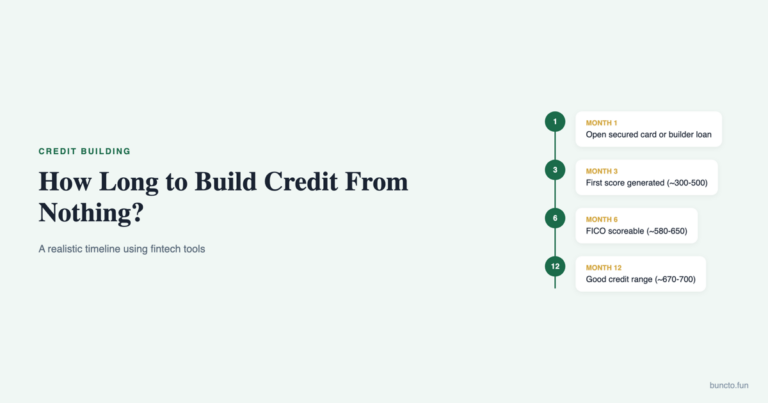
After one month, a credit builder loan creates an open tradeline on your report. After three months, VantageScore can generate a score. After six months, FICO generates a score — this is the critical milestone, because credit scores require at least one tradeline open for six months, according to FICO.com. Most users see a FICO score in the 580 to 650 range at this point.
By month twelve, consistent on-time payments on both a credit builder loan and a secured card typically push scores into the 640 to 700 range. The combination builds payment history (35% of FICO) and credit mix (10% of FICO) simultaneously. Keep credit utilization below 30% on the secured card — ideally below 10% — to maximize the amounts-owed factor (30% of FICO). See our guide on how long it takes to build credit from nothing for the full timeline.
What Mistakes Should You Avoid With Credit-Building Apps?
The three most common mistakes are using too many apps at once, missing payments because of forgotten subscriptions, and spending money on tools that duplicate what you already have. Simplicity and consistency beat complexity every time.
Do not sign up for five credit-building services simultaneously. Each application may generate a hard inquiry, and the monthly costs compound. Two tools — one installment, one revolving — cover the tradeline diversity you need. Adding a third (Experian Boost) is worthwhile only because it is free and instant.
Set autopay on every credit-building tool before your first payment is due. A missed payment on a credit builder loan or secured card drops a thin credit file by 50 to 100 points. The entire purpose of these tools is building positive payment history — one late payment undermines months of progress. If $25/month for Self plus a small secured card balance stretches your budget, start with just Chime Credit Builder at $0 and add Self later when you have room. Building credit should never put you in financial stress.
Sources
- FICO — credit score factors and tradeline requirements
- Experian Boost — product details and average score impact
- Self — credit builder loan terms and reporting
- Chime Credit Builder — secured card terms
- Consumer Financial Protection Bureau — credit building guidance
- AnnualCreditReport.com — free credit report access