Quick answer: A credit builder loan is a small loan where the lender holds your borrowed amount in a savings account while you make monthly payments. Each payment is reported to all three credit bureaus — Experian, Equifax, and TransUnion. After you finish paying, you receive the saved funds. It builds your payment history without requiring existing credit or a large upfront deposit.
In this article
- How Does a Credit Builder Loan Actually Work?
- Which Companies Offer Credit Builder Loans?
- How Much Does a Credit Builder Loan Really Cost?
- Does a Credit Builder Loan Actually Improve Your Credit Score?
- Should You Choose a Credit Builder Loan or a Secured Credit Card?
- Who Should Not Get a Credit Builder Loan?
- Sources
How Does a Credit Builder Loan Actually Work?
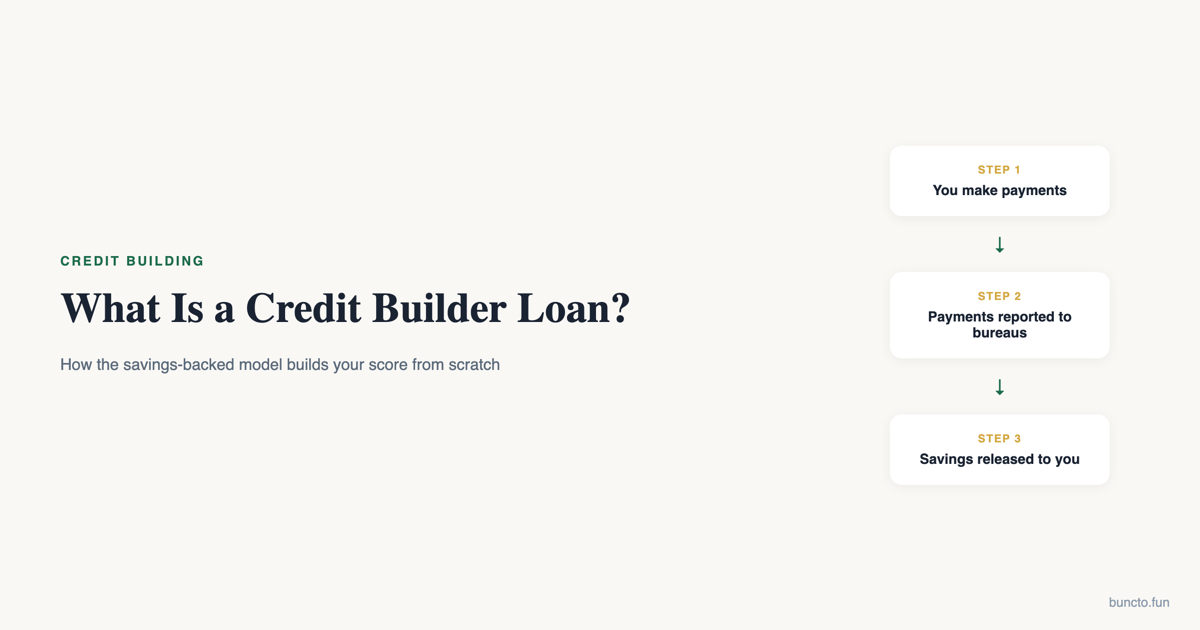
You borrow a small amount — typically 00 to ,000 — but the lender holds it in a locked savings account instead of giving it to you upfront. You make fixed monthly payments over 12 to 24 months. Each payment is reported to all three credit bureaus. When the loan term ends, you get the saved amount minus any fees or interest.
The mechanics are the reverse of a traditional loan. With a normal personal loan, you receive money and pay it back. With a credit builder loan, you pay first and receive later. The locked savings account acts as collateral, which means the lender takes no real risk. This is why credit builder loans require no credit check and no minimum credit score.
According to the product terms of service for Self and MoneyLion, credit builder loans report to all three bureaus. This is important because credit scores require at least one tradeline open for six months, as noted by FICO.com. A credit builder loan creates that tradeline from scratch. For a complete roadmap, read our guide on building credit from scratch.
Which Companies Offer Credit Builder Loans?
Self, MoneyLion, and Grow Credit are the three largest fintech providers of credit builder loans. Each has a different pricing structure, loan size, and feature set aimed at people with no credit or damaged credit.
| Provider | Loan Amount | Term | Monthly Cost | Reports To | Savings Payout |
|---|---|---|---|---|---|
| Self | 20-,700 | 12-24 months | 5-50 | All 3 bureaus | Yes, minus fees/interest |
| MoneyLion | 00-,000 | 12 months | Varies | All 3 bureaus | Yes |
| Grow Credit | N/A (subscription model) | Monthly | -bash-.99/month | All 3 bureaus | No savings component |
| Credit unions | 00-,000 | 6-24 months | Varies | Varies (usually all 3) | Yes |
Self is the most established fintech option with the widest range of loan sizes. MoneyLion bundles its credit builder with a broader financial app. Grow Credit works differently — it pays your subscriptions (Netflix, Spotify) and reports those payments, rather than holding a savings balance. Credit unions offer traditional credit builder loans with potentially lower interest rates but require membership.
How Much Does a Credit Builder Loan Really Cost?
A typical credit builder loan costs 0 to 50 in total interest and fees over the loan term. On Self’s most popular plan — 20 over 24 months at 5/month — you pay approximately 0 in interest. You get roughly 40 back when the term ends.
The effective cost is the interest you pay. Think of it as paying 0 to 50 for a credit history that opens the door to credit cards, auto loans, and apartments that require a credit check. Compared to a secured credit card that requires a 00-00 deposit upfront, the credit builder loan spreads the cost across monthly payments.
Watch for administrative fees. Some providers charge a one-time setup fee of to 5. Others include it in the interest rate. Always calculate the total cost — monthly payment times number of months, minus the payout — before signing up. Our research methodology explains how we compare these costs.
Does a Credit Builder Loan Actually Improve Your Credit Score?
Yes, if you make every payment on time. A credit builder loan creates an installment tradeline on your credit report. Payment history accounts for roughly 35% of your FICO score — the single largest factor. Each on-time payment strengthens that history.
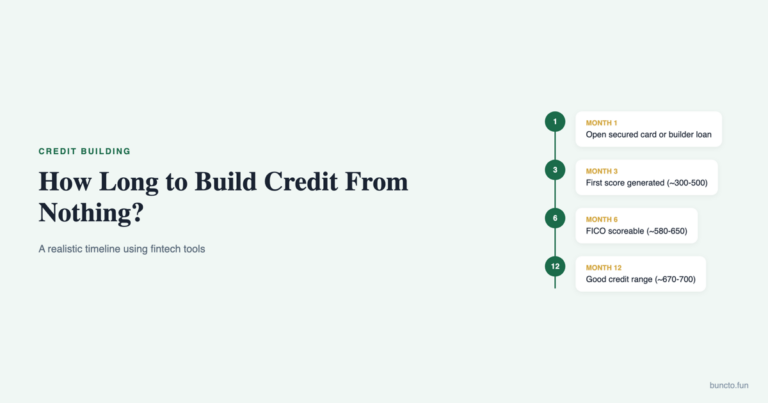
The improvement is not instant. According to FICO.com, you need at least one tradeline open for six months before a FICO score can be generated. After six months of on-time payments, most users see a score appear in the 580 to 650 range, depending on whether they have other activity on their report.
A missed payment reverses the benefit quickly. One late payment can drop a thin credit file by 50 to 100 points. If you cannot commit to the monthly payment for the full term, a credit builder loan will hurt more than help. Only start one if the payment fits comfortably in your monthly budget.
Should You Choose a Credit Builder Loan or a Secured Credit Card?
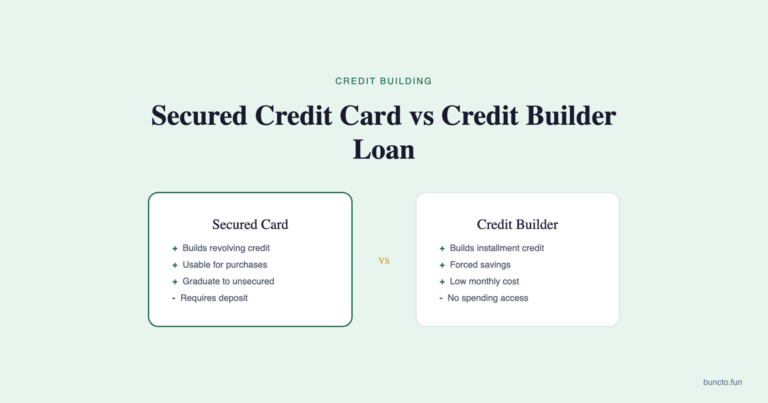
Choose a credit builder loan if you do not have a lump sum for a secured card deposit. Choose a secured card if you want to build credit and earn rewards at the same time. Both report to credit bureaus. Both build your payment history. The difference is the upfront cost and the type of tradeline.
A secured credit card requires a 00 to 00 deposit on day one. That deposit becomes your credit limit. You use the card for purchases and pay the bill monthly. It creates a revolving tradeline. A credit builder loan requires no upfront deposit — you pay 5 to 0 per month over time. It creates an installment tradeline.
I think the credit builder loan is the better starting point for most people building from nothing. The monthly payment model fits tighter budgets, and the savings payout at the end provides a small financial cushion. For those who can afford the deposit, adding a secured card alongside the loan builds both installment and revolving history simultaneously. Read our full secured card vs credit builder comparison for the detailed breakdown.
Who Should Not Get a Credit Builder Loan?
If you already have a credit score above 650 with active tradelines, a credit builder loan adds little value. The tool is designed for people with no credit history or a thin file with fewer than two accounts. If you already have a credit card, auto loan, or student loan in good standing, your tradeline mix is already working for you.
People with existing collections or charge-offs should address those first. A credit builder loan adds positive history, but it does not erase negative marks. A collection stays on your report for seven years regardless of new positive tradelines. The CFPB at consumerfinance.gov provides guidance on disputing inaccurate negative marks.
Immigrants building credit in the United States may use an ITIN to apply for credit at some banks, according to CFPB.gov. A credit builder loan paired with ITIN eligibility is a strong combination. See our guide on building credit as an immigrant without an SSN.