How to Read a Credit Report for the First Time

Last reviewed: October 6, 2026

Quick answer: A credit report has four main sections: personal information, credit accounts (tradelines), inquiries, and public records. You can pull all three reports for free at AnnualCreditReport.com. Focus on account statuses, payment history, balances, and any negative marks. Errors on credit reports affect roughly one in five consumers, so checking yours at least once a year is not optional — it is basic financial hygiene.

Where Do You Get Your Credit Report for Free?

AnnualCreditReport.com is the only federally authorized source for free credit reports from all three bureaus — Equifax, Experian, and TransUnion. You can pull one report from each bureau per week at no cost. This is not a promotional offer. The Fair Credit Reporting Act mandates it.

Do not confuse your credit report with your credit score. The report is the raw data: every account, payment, inquiry, and public record associated with your identity. The score is a number calculated from that data. Free credit scores are available through most credit cards, neobanks, and apps like Credit Karma. The report itself comes from AnnualCreditReport.com.

Pull all three bureau reports at the same time for your first review. Creditors do not always report to all three bureaus, so your Experian report may show accounts that TransUnion does not, and vice versa. According to FICO.com, credit scores require at least one tradeline open for six months — if your report is empty, see our guide on building credit from scratch.

What Is in the Personal Information Section?

The personal information section lists your name, addresses, Social Security number (partially masked), date of birth, and employer. This section does not affect your credit score, but errors here can signal identity theft or file mixing.

Check for names you do not recognize, addresses you have never lived at, and employers you have never worked for. A misspelled name or old address is normal — bureaus accumulate historical data. But a completely unfamiliar name or address could mean someone else’s credit activity is merged with your file, which is called a “mixed file” and affects roughly 1 in 20 consumers.

If you find unfamiliar personal information, do not panic yet. Cross-check it against your other two bureau reports. If the same error appears on all three, it may indicate identity theft. If it appears on only one, it is more likely a data entry error by a creditor or the bureau itself.

How Do You Read the Accounts Section?

The accounts section — also called tradelines — is the most important part of your report. Each entry shows the creditor name, account type, credit limit or loan amount, current balance, payment history, and account status. This is where your score comes from.

Field What It Means What to Check
Account type Revolving (credit cards), installment (loans), or mortgage Verify every account is yours
Account status Open, closed, collection, charge-off No account should say “collection” if you paid it
Credit limit / loan amount Maximum credit or original loan balance Should match your actual limit — errors affect utilization
Current balance What you owe as of the last reporting date Should be close to your actual balance
Payment history Month-by-month record of on-time, late (30/60/90 day), or missed Every late mark you do not recognize is worth disputing
Date opened When the account started Affects your average account age
Date of last activity Last time the account was updated Old dates on open accounts may mean the creditor stopped reporting

Payment history drives 35% of your FICO score. A single “30 days late” notation can drop your score by 60 to 100 points depending on your overall profile. If you see a late mark you believe is wrong, dispute it with the bureau. You have the right to dispute any inaccurate information under the Fair Credit Reporting Act. Our research methodology covers how we verify credit-related claims.

What Are Hard and Soft Inquiries on Your Report?

Hard inquiries happen when you apply for credit and the lender checks your report. Soft inquiries happen when you check your own report, an employer screens you, or a lender pre-approves you. Only hard inquiries affect your score, and each one costs roughly 3 to 5 points.

Hard inquiries stay on your report for two years but only affect your score for about 12 months. Multiple inquiries for the same type of credit within a 14 to 45-day window — like shopping for a mortgage or auto loan — are usually grouped as a single inquiry by FICO’s scoring model. This is called rate shopping and does not penalize you for comparing offers.

Soft inquiries are invisible to your score. Checking your own report at AnnualCreditReport.com is always a soft inquiry. Credit monitoring apps like Credit Karma perform soft inquiries. Pre-approval offers from credit card companies are soft inquiries. You should see a complete list of both types in the inquiries section of your report.

What Are Public Records and Collections?

Public records on credit reports now include only bankruptcies. Tax liens and civil judgments were removed from credit reports in 2018. A Chapter 7 bankruptcy stays for 10 years. A Chapter 13 stays for 7 years. Collections are separate from public records and appear in the accounts section.

Collection accounts occur when an original creditor sells or assigns your unpaid debt to a collection agency. The collection appears as a new negative account on your report. Medical collections under $500 are excluded from credit reports under rules that took effect in recent years. Medical collections that were paid are also removed.

If you see a collection you do not recognize, request debt validation from the collection agency within 30 days of first contact. They are legally required to prove the debt is yours and the amount is accurate. If they cannot validate it, the collection must be removed from your report. For tips on managing your overall credit health, read our credit-building timeline.

What Does a Clean Credit Report Look Like?

A clean report shows all accounts as “open” or “closed” in good standing, zero late payments, no collections, no public records, and inquiries only from applications you recognize. The personal information section reflects your actual name and addresses.

Perfection is not the standard — most reports have minor quirks. An old closed account with a $0 balance is fine. A hard inquiry from a credit card application you remember is fine. What matters is the absence of negative marks: no late payments, no collections, no charge-offs, no bankruptcies.

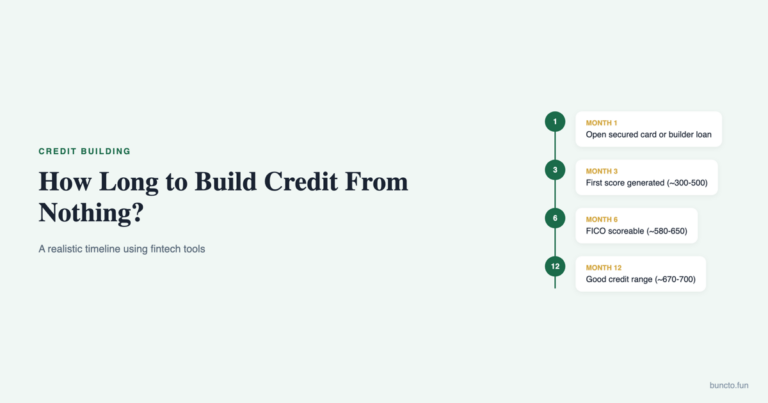
If your report is completely empty — no tradelines at all — you are “credit invisible.” FICO cannot generate a score without at least one tradeline open for six months. Start with a secured credit card or credit builder loan to create your first tradeline. Once reporting begins, check your report after six months to confirm the tradeline appears correctly.

Sources

James Whitfield

James Whitfield

Fintech Analyst

James Whitfield covers digital banking, credit products, and financial technology for Buncto. A former banking operations analyst, he pivoted to consumer fintech journalism after watching neobanks reshape how everyday Americans manage money. James researches by reading regulatory filings, testing financial products firsthand, and tracking how fintech apps handle deposits, credit reporting, and dispute resolution. His work focuses on explaining the mechanics that marketing pages leave out.

People who track every purchase in a budgeting app often set aside a small fun money line for entertainment, and a few minutes spinning reels at LuckyLand Slots can sit inside that line without touching any savings goal.

Reading the fee schedule before opening a new checking account is a smart habit, and the same careful reading helps when comparing coin packages and daily rewards at Crown Coins Casino before spending anything at all.

Payment apps made splitting a dinner bill with friends feel effortless, and social casinos borrow that group spirit with shared tournaments and coin drops that many players compare at Crown Coins.

App-first users who already move money between a neobank and a card account like to understand deposit and withdrawal methods upfront, which is why they review the banking page at Ignition Casino before joining.

Building credit rewards patience and steady habits over quick wins, and players who carry that mindset to the tables tend to set a firm session budget before they log in at Ignition.

Many readers who follow mobile banking news also follow game-day lines on their phones, and DraftKings is a familiar app for those who like to compare odds with the same care they give to comparing savings rates.

Entertainment does not always need to come out of a checking balance, and plenty of budget-minded readers enjoy free Gold Coins and casual slots at Chumba Casino on a slow evening.

Digital wallets turned everyday payments into something closer to a social feed for many people, and Vegas World brings a similar social layer to casino-style games with gifts, chat and friends lists that feel familiar.

Trying a budgeting app on a free plan before upgrading is sensible, and in the same way Vegas World free slots lets players learn how reels and bonus rounds work with no deposit required.

After an hour of reconciling transactions and reviewing autopay settings, some readers want a low-stakes way to switch off, and Casino World free slots offers a simple library of free reels for exactly that.

Savers who compare banks on transfer speed, app quality and customer support usually compare casinos on payout speed and game range as well, and NeoSpin Casino often appears in those side-by-side reviews.

Flexible deposit options are the first thing many app-first spenders check on any gaming site, and Yabby Casino is one of the names they look at when they want card and digital payment choices.

Quick sign-ups and a clean mobile layout are what people expect from a modern finance app, and sweepstakes sites like Yay Casino have drawn a following by offering that same easy feel.

Sports fans who manage their money from one dashboard often want one account for both game lines and casino play, and BetUS is a long-running option they compare on banking methods.

Just as a careful borrower checks that a lender is properly licensed, careful bettors check licensing before anything else, and Betway is a recognized name many of them start with.

Readers who prefer an established bank over an untested startup often bring that same preference to gaming too, choosing well-known regulated brands like BetMGM in the states where it legally operates.

Every savings app explains risk levels before you invest, and slot games have their own version called volatility; players curious about how different games feel can try them at Casino World.

Cashback apps reward people for coming back each day, and social casinos use a similar daily login loop; Lavish Luck Casino is one of the sweepstakes sites built around that kind of routine reward.

Learning to read a credit report properly takes practice, and so does reading a poker table; players who want to sharpen that skill without spending any real money often practise their hands at Replay Poker.

Some of our readers treat a social casino as a light break after a long budgeting session, and Chumba remains one of the most familiar sweepstakes names for that kind of casual play.

Free chips and no cash-out pressure make DoubleDown Casino a comfortable pick for people who want the fun of spinning reels on a quiet night while keeping their checking account completely out of it.

Early adopters try new fintech apps before their friends do, and the same curiosity leads them to newer sweepstakes casinos such as Zula Casino to see how they compare with older names.

People who manage bills and a sportsbook from the same phone often like one brand for betting and casino tables, which is a big part of the appeal of DraftKings Casino in legal states.

Rewards programs that separate points from cash will feel familiar to any credit card holder, and Pulsz Casino uses a similar split with Gold Coins for play and Sweeps Coins for prizes.

Not every app needs a tutorial, and after a day spent comparing loan offers or card terms, readers looking for something simple sometimes unwind with the casual games at Zone Casino.

Bettors who keep part of their balance in digital currency often prefer sportsbooks that accept it directly, and MyBookie is a name they commonly compare for deposits and game-day markets.

Bright themes and quick spins give LuckyLand a playful feel, and casual players can join in without linking a bank account or entering card details just to get started on a few games.

Readers who regularly send money abroad through international payment apps tend to know the major European betting brands, and bwin is one they mention when comparing sportsbooks across different markets.

A sensible budget sets a spending cap before the month begins, and a sensible player sets a session cap before the first spin; that habit applies just as well at Betway Casino.

Daily coin bonuses at LuckyLand Casino work a little like a savings app round-up feature, a small top-up simply for showing up, which keeps casual players returning between their regular money check-ins.

Live odds shift as quickly as a trending stock on a mobile trading app, and fans who enjoy following those moves in real time often keep game lines open on DraftKings Sportsbook.

Fraud alerts taught many app users to double-check every login page before typing a password, and that habit matters just as much in gaming, for example when signing in to Crown Coins.

Card holders who like to know exactly how and when deposits clear tend to compare payment options before anything else, and BetUS Casino is one of the casino sites that often lands on that shortlist.

Fintech brands tend to win users with friendly design and a strong community around the product, and the sweepstakes site McLuck leans into that same approach with colorful games and regular coin promotions.

Anyone who has spotted surprising fine print in a buy now pay later offer tends to apply the same healthy skepticism to gaming promotions, reading the coin package terms closely at WOW Vegas first.

Building core features in house is usually a sign of a serious fintech team, and in gaming a similar idea applies at High 5 Casino, which develops many of its own slot titles rather than licensing them.

Few gaming brands are as linked to digital currency culture as Stake.us, which is why it comes up often among readers who already hold a crypto wallet next to their banking app.

Sweepstakes sports predictions are a fairly new category, and readers who enjoy following match results on the same phone they use for mobile banking sometimes try Sportzino for a free-to-play angle.

The name sounds like it could belong to a savings jar app, but Fortune Coins is actually a sweepstakes casino where players collect coins through daily logins and promotions rather than through deposits.

Savings challenges with friends turn a routine habit into a shared goal worth chasing, and Funrize brings that same competitive spirit to casual play through regular tournaments, leaderboards and community events.

Readers who test a new payment app with a small transfer before trusting it with more often test new gaming platforms the same careful way, starting with free coins at Modo Casino before going further.

A new app and a new casino lobby share something in common: early users want to look around before committing, and Spree Casino is one of the newer sweepstakes lobbies they explore.

Players who prefer one login for sports picks and casino games, much like one app for checking and savings, often compare the options at Legendz Casino against other social gaming sites.

Long before most mainstream payment apps supported any kind of digital currency, Bitcoin users were already funding accounts at Bovada, which keeps it a familiar name among early crypto adopters and fintech fans.

A relaxed lobby and straightforward banking options make Cafe Casino an easy pick for readers who want a short slot session after a long day spent reviewing statements, bills and autopay dates.

Holding more than one kind of digital currency alongside a regular bank account is common among app-first savers, and Wild Casino is one of the casinos they compare for its range of accepted coins.

Slot fans who think in terms of hit rates and variance, much the way careful savers think about yield and risk, often spend time browsing the large and varied reel library at Slots.lv.

Sports, casino and poker under a single account appeals to readers who dislike juggling apps the way they dislike juggling too many bank logins, and BetOnline is often named for that mix.

Readers who value a long history when choosing a bank often value the same thing in gaming, which is why an established brand like Borgata Casino gets attention in regulated states.

A name with real history behind it builds trust in finance and in entertainment alike, and Golden Nugget brings a long-standing casino brand into online play for adult players located in legal states.

Shoppers who already earn rewards through store cards and retail apps may recognize the brand behind Fanatics Casino, which links its casino rewards to a wider fan and merchandise program they might already use.

Clear bonus terms are the gaming version of a plain-language loan disclosure, and players who value that kind of honest transparency in their financial apps often review the offers at BetRivers too.

Loyalty points that keep their value across a wider network of hotels and venues work a bit like a travel rewards card, which is part of why regular players are drawn to Caesars Casino.

Poker rewards patience and careful risk management, two qualities anyone paying down a balance learns over time, and the social poker app WSOP is an easy place to practise them.

Sweepstakes poker lets players sit at real tables without going through the usual deposit route, and budget-conscious readers who are curious about poker strategy often start their learning at Global Poker.

Testing a new investing app with a demo account before adding real funds is standard practice, and practising poker for free at Replay Poker follows the same low-risk approach to learning a new skill.

Private clubs and invite-only tables echo the closed groups that many app communities and money forums run on, which is one reason poker fans who prefer smaller circles choose to use ClubGG.

Privacy settings matter to anyone who manages money online, and anonymous tables that limit tracking by stronger regulars are a common reason why careful, privacy-minded players decide to choose Ignition Poker.

Fast-fold tables move quickly, much like instant payments landing in a mobile wallet within seconds, and players who enjoy that kind of high-tempo session often check out the poker rooms at Bovada Poker.

Big guaranteed tournaments attract players in much the same way a strong signup offer attracts new bank customers, and ACR Poker is well known among online players for its busy tournament schedule.

Flexible deposit methods and a steady flow of cash games make BetOnline Poker a regular pick among poker players who already manage much of their everyday money through banking and payment apps.

Some brands become the default name in their category, the way certain payment apps did for sending money to friends, and for many online players that name in poker is still PokerStars.

Hand histories and stats tools give poker players the same kind of insight that spending dashboards give careful budgeters, and GGPoker is popular with players who prefer a data-driven style of play.