Quick answer: No, you cannot have two Chime accounts. Chime allows one spending account and one savings account per person, verified by Social Security number. Opening a second account under another identity violates Chime’s terms of service and federal banking law. If you need separate accounts for budgeting or business, use a second neobank like Varo, Current, or SoFi alongside your Chime account.
Why Does Chime Only Allow One Account Per Person?
Chime verifies your identity with your Social Security number during enrollment, and its partner banks — Bancorp Bank and Stride Bank — are required by federal Know Your Customer (KYC) regulations to maintain one account per verified identity. This is not a Chime policy choice. It is a banking compliance requirement that applies to every FDIC-insured institution.
According to FDIC.gov, deposits at Chime’s partner banks are insured up to $250,000 per depositor per insured bank. The “per depositor” language is key — your identity is tied to your account for insurance and regulatory purposes. Neobanks partner with FDIC-insured banks for pass-through insurance, which means the same KYC rules apply even though you interact with Chime’s app rather than the bank directly.
Chime’s system flags duplicate SSNs during enrollment. If you try to open a second account with the same information, the application is rejected. If you already have an account and try to open another, you receive an error message directing you to your existing account. Read our neobanks guide for how other digital banks handle account limits.
What Happens If You Close and Reopen a Chime Account?
You can close your Chime account and open a new one, but you cannot maintain two simultaneously. Closing takes 24 to 48 hours after you transfer all funds out. Reopening requires a new application, and Chime may check your ChexSystems report before approval.
There is a gap period between closing and reopening. During this time, you have no access to Chime services — no SpotMe, no early direct deposit, no debit card. Your SpotMe limit resets to the starting amount when you reopen, and your direct deposit routing number changes, meaning you need to update payroll with your employer.
People who close and reopen to “reset” their SpotMe limit or resolve account issues usually find the process creates more problems than it solves. If your SpotMe limit dropped due to deposit changes, the same deposit pattern will produce the same limit on a new account. For help managing the direct deposit transition, see our guide on switching banks without losing direct deposit.
Does Chime Offer Joint Accounts?
No. Chime does not offer joint accounts as of when I last checked. Every Chime account is individually owned. Couples, roommates, and business partners who want a shared account need to look elsewhere.
Traditional banks like Chase, Wells Fargo, and Bank of America offer joint checking accounts where two people share ownership, both have debit cards, and both can manage the account. Among neobanks, this feature is rare. Varo does not offer joint accounts either. SoFi does allow joint accounts for its checking and savings products, making it one of the few digital banking options for shared finances.
The workaround many Chime users adopt is sharing login credentials, which Chime explicitly prohibits in its terms of service. If something goes wrong — a dispute, unauthorized transaction, or account freeze — Chime will only work with the account holder whose SSN is on file. Shared credentials eliminate your dispute protections.
What Are the Alternatives If You Need Multiple Accounts?
Use multiple neobanks. Open Chime as your primary spending account and add Varo, Current, or SoFi for additional account needs. Each neobank allows one account per person, but nothing prevents you from holding accounts at different institutions.
| Need | Solution | Why It Works |
|---|---|---|
| Separate budgeting | Chime (spending) + Varo (saving) | Two accounts, two debit cards, one for bills and one for discretionary |
| Business + personal | Chime (personal) + Novo or Relay (business) | Business neobanks offer EIN-based accounts |
| Joint finances | Chime (individual) + SoFi (joint) | SoFi allows joint checking accounts |
| Travel + home | Chime (domestic) + Wise (international) | Wise offers multi-currency accounts |
| Emergency fund | Chime savings + external HYSA | Keep emergency savings in a high-yield account |
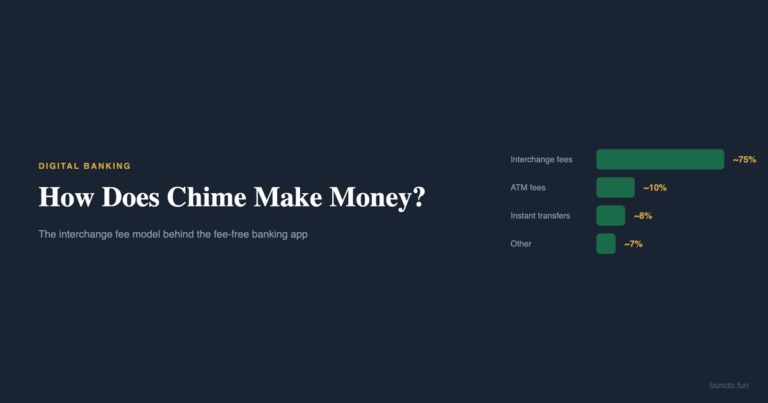
My recommendation: pair Chime with one other account rather than trying to hack the one-account limit. Chime excels at fee-free daily banking with SpotMe and early direct deposit. Add a second neobank or a high-yield savings account at Marcus, Ally, or Wealthfront for savings goals. Two institutions, two FDIC insurance limits, and better financial separation. Learn how Chime’s revenue model works in our Chime business model breakdown.
Can You Get Banned for Trying to Open Two Chime Accounts?
Attempting to open a second account with the same SSN will fail but will not ban your existing account. Using a different SSN or false identity to create a second account is identity fraud and a federal crime under 18 U.S.C. 1028. Chime will close both accounts and may report the activity.
Chime’s fraud detection catches most duplicate attempts during enrollment. Beyond duplicate SSNs, the system flags matching addresses, phone numbers, and device fingerprints. Even if an application initially succeeds, subsequent verification steps typically catch the duplication and trigger account review.
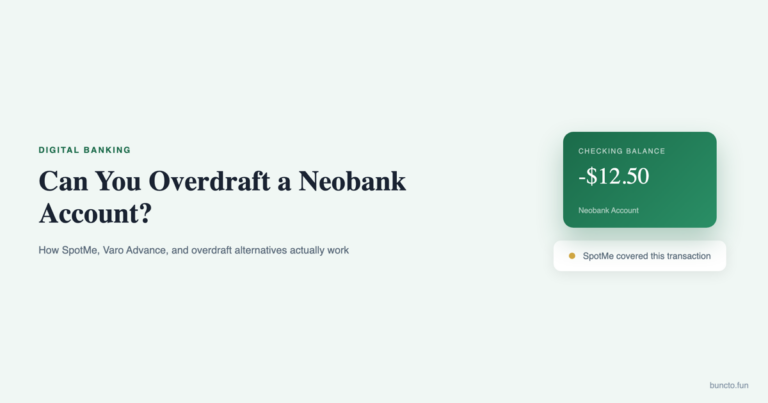
The risk is not worth the reward. A second Chime account provides no benefit that a second neobank does not provide legitimately. If you need overdraft protection at two institutions, open Chime with SpotMe and Varo with Varo Advance — two legitimate accounts with two separate overdraft alternatives, both within the rules. Our research methodology explains how we verify these policies.
Sources
- Chime — account terms and one-account-per-person policy (chime.com)
- FDIC — deposit insurance coverage and per-depositor rules
- Consumer Financial Protection Bureau — KYC and bank account regulations (consumerfinance.gov)
- SoFi — joint account availability (sofi.com)